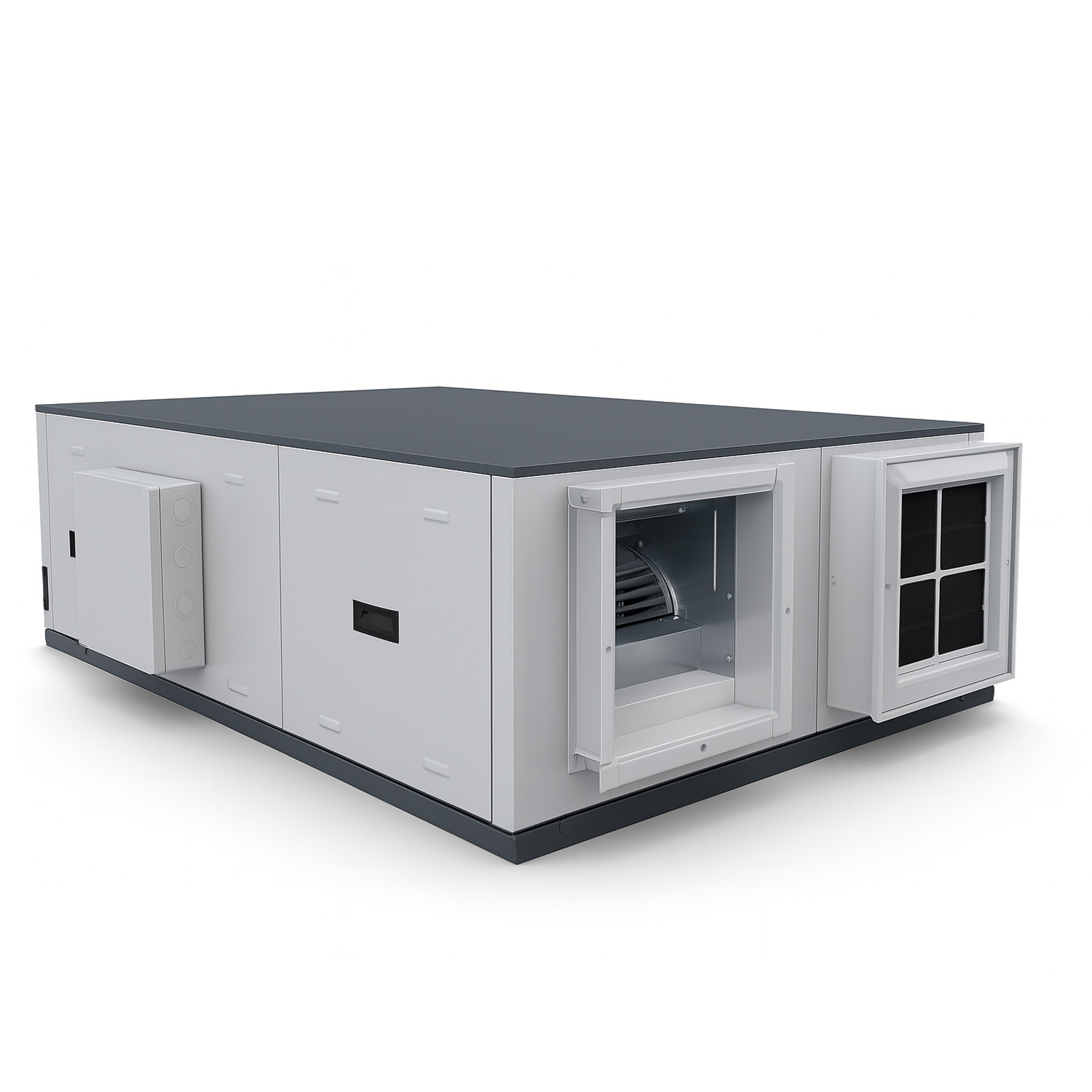
Heat Recovery Unit

Heat Recovery Unit

Features and Applications

Heat recovery units are devices used in building ventilation systems that increase energy efficiency by transferring heat from exhaust air to incoming fresh air. These units are designed to improve indoor air quality while reducing heating and cooling costs.

Main Features
  • Energy Saving: Utilizes thermal energy from exhaust air to pre-condition incoming fresh air, reducing the load on HVAC systems.
  • Various Heat Exchanger Types: Offers project-specific solutions with plate (dry type), rotary (enthalpy type), and cross-flow heat exchanger options.
  • Quiet Operation: Operates at low noise levels thanks to a sound-insulated casing and balanced fan-motor structure.
  • Compact and Modular Design: Space-saving structure optimized for easy installation and maintenance.
  • High Efficiency: Depending on the exchanger type, heat recovery efficiency can reach between 50% and 90%.
  • Optional Filtration: Can be equipped with filter options such as G4 and F7 to improve indoor air quality.
  • Automation Compatibility: Enables remote monitoring and control via integration with BMS (Building Management Systems).
Application Areas
  • Residential buildings, offices, and educational facilities
  • Hotels, shopping malls, and restaurants
  • Hospitals, laboratories, and clinics
  • Industrial facilities including staff areas and production zones
  • Green building projects focused on energy efficiency